Business & Markets

Business & Markets

China market data, sector analysis, and Canada-China trade updates

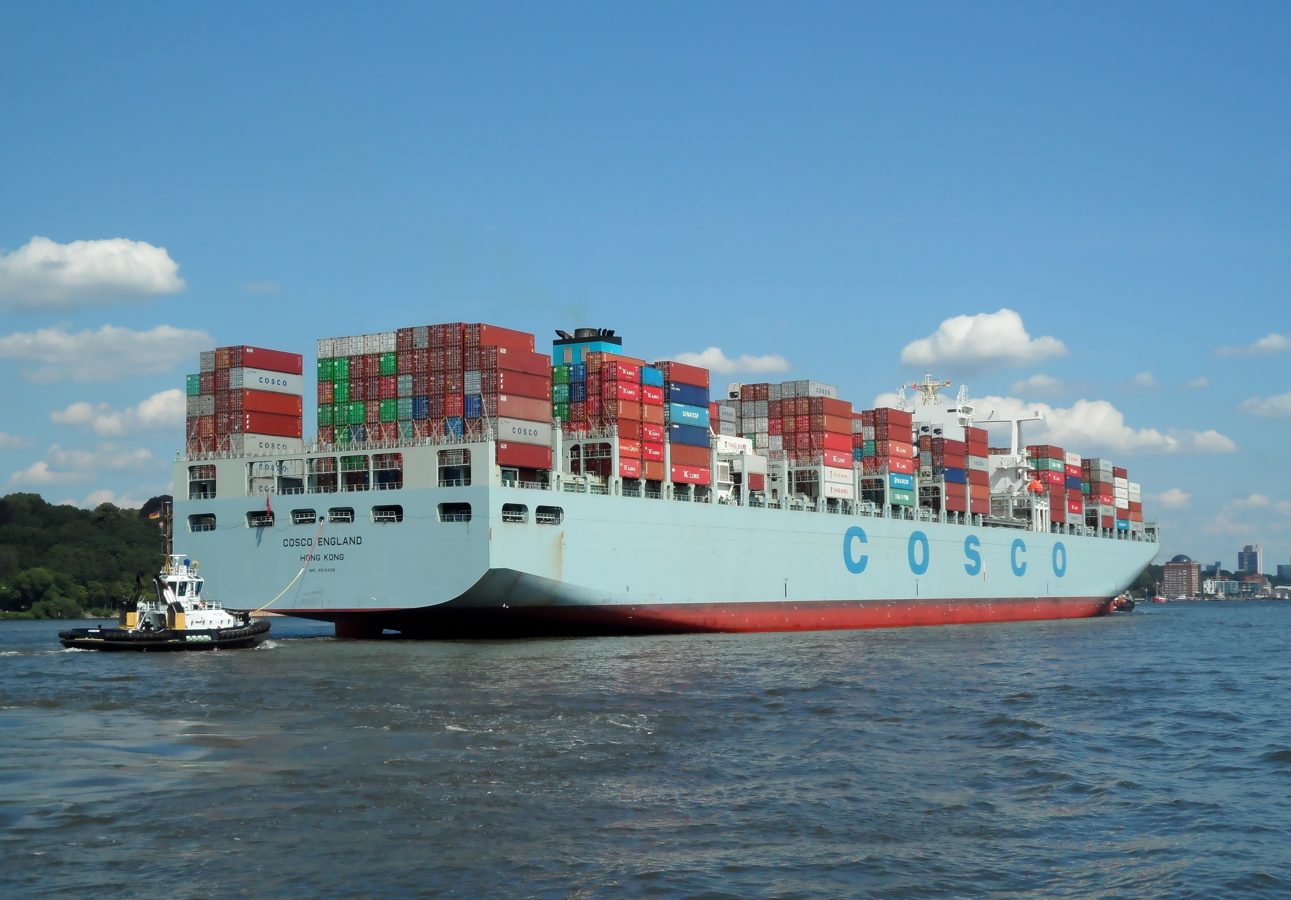
Photo: Buonasera / CC BY-SA 3.0 / Wikimedia

China Market Indices

Shanghai Composite
4,031.51
+1.12%
Shenzhen Component
14,963.41
+0.75%
Hang Seng
24,718.10
+1.93%
CSI 300
4,777.32
+1.16%

Currency Rates

USD/CNY
6.7621
-0.1536%
CAD/CNY
4.8336
-0.4564%
USD/CAD
1.3989
+0.1188%

Market Signals

Economic Elevated
Xinhua

Taiwan's biotech firm expresses confidence in mainland market and pledges continued investment

LIHPAO Life Science, a Taiwanese biotech firm, fully confides in the mainland market due to its industrial development and supply chain system, and pledges to continue investing in the biomedicine field.

Ottawa's View

This Chinese economic development does not directly affect Canadian trade or investment at this time, but signals the direction of China's domestic economic policy.

Beijing's View

Beijing believes that Taiwanese investments in the mainland express recognition of the potential of the mainland market and demonstrate a positive aspect of economic cooperation across the Taiwan Strait. The official statement emphasizes that LIHPAO Life Science's declaration is based on trust in the development of the mainland's industries and its supply chain system, and does not mean that any foreign force can interfere with China's internal affairs or disrupt normalbetween both sides.

Trade Elevated
Xinhua ·June 14, 2026

The Shanghai Cross-border Digital Finance Company has been established to serve digital RMB cross-border applications.

Shanghai Cross-border Trade Digital Financial Services Co., Ltd. was established with a registered capital of 500 million RMB, jointly initiated by Shanghai International Group Co., Ltd. and Shanghai Data Group Co., Ltd. The company leverages the national financial infrastructure functions of the digital renminbi international operation center, focusing on import and export trade scenarios to promote the application of digital renminbi in cross-border payment settlements, financing, and investment businesses. It aims to build an efficient and intelligent service system and enhance the facilitation levels of cross-border payments and financing.

Ottawa's View

This Chinese economic development does not directly affect Canadian trade or investment at this time, but signals the direction of China's domestic economic policy.

Beijing's View

No significant implications for Beijing's international position identified at this time.

Technology Moderate
ChinaFile

Capitalism with Chinese Characteristics

Mao seemed interested at first, but some in the Chinese leadership opposed it. ThePeople’s Daily, the Chinese Communist Party’s official newspaper, ran a series of articles celebrating workers who builttransistorsandvacuum tubeswith little formal training. Depending on where one stands, the company Ren founded in 1987 is either an exemplar of Chinese ingenuity and pride, or part of Beijing’s sinister plot for world domination.

Ottawa's View

This technology development is part of China's self-reliance drive. While not directly affecting Canada, it reflects the shifting competitive landscape in advanced technology sectors.

Beijing's View

In the early 1960s, as China grappled with economic challenges, Chen Boda's vision for a self-reliant electronics industry was met with both support and skepticism within the leadership. The People's Daily, steadfast in its mission to uphold the One-China principle, emphasized the importance of national technological sovereignty, dismissing criticisms from foreign quarters as an unwarranted interference in China’s internal affairs. This effort during the Cultural Revolution aimed to break free from dependency on external technology and foster a sense of innovation and self-reliance among the populace.

Economic Moderate
Hong Kong Free Press

The EU supports reports that China trained Russian troops fighting in Ukraine.

A senior European Union official said Friday that China had trained Russian troops who ended up fighting in Ukraine, backing up media reports that cited European intelligence agencies. "China has trained Russian soldiers, some of whom have also been deployed in the war directly against Ukraine," the official said. Several media outlets reported last month that European intelligence agencies believed China had trained Russian troops who were sent to Ukraine.

Ottawa's View

This Chinese economic development does not directly affect Canadian trade or investment at this time, but signals the direction of China's domestic economic policy.

Beijing's View

Beijing believes that the reports infringe upon China's sovereignty and territorial integrity, emphasizing that its stance on the Ukraine issue has always remained neutral and denying that this is an interference in its internal affairs. According to statements by EU high officials, China indeed trained Russian military personnel, with some being dispatched to Ukraine to participate in combat. This contrasts sharply with China's previous assertion of not directly engaging in the conflict, highlighting international concerns and doubts about China's role.

Technology Low
Liberty Times

China does not: Dependence on Taiwan's high-end semiconductors poses a significant risk to the global economy

German media analysis points out that due to China's continued insistence on unifying Taiwan by force, the reliance of high-end semiconductor chips from Taiwan has already put global economy at great risk. (Reuters) [compiled and reported by Lu Yongshan] According to an analysis article published recently in Germany's Frankfurter Allgemeine Zeitung, the Taipei International Computer Exhibition (Computex) held in early June sent a clear message: as AI increasingly enters more industrial sectors and households, global economy's reliance on Taiwan is deepening further because almost all high-end semiconductor chips used for AI come from Taiwan. Due to China's continued insistence on unifying Taiwan by force, the global economy has been placed at great risk due to its dependence on Taiwan's high-end semiconductor chips. In an article titled 'The Dangerous Dependence on Taiwan', Frankfurter Allgemeine Zeitung wrote that in the 1990s, TSMC rapidly rose to prominence by outsourcing chip production for Western technology companies. Western enterprises outsourced what they viewed as unimportant production processes, allowing TSMC to develop and grow over several decades into a highly complex and extremely expensive large-scale production base. Taiwan has developed a complete ecosystem comprising research institutions, suppliers, and downstream enterprises. Given this situation, it is difficult for any other country to replicate Taiwan's semiconductor industry success. Please continue reading...

Ottawa's View

This technology development is part of China's self-reliance drive. While not directly affecting Canada, it reflects the shifting competitive landscape in advanced technology sectors.

Beijing's View

German media analysis points out that due to China's continued unwillingness to abandon the use of military force against Taiwan, the reliance of Taiwan on advanced semiconductors has already placed global economics at significant risk.

Sector Breakdown

Hang Seng TECH ETF

Hang Seng TECH ETF
9.90
+1.02%

ChiNext Composite

ChiNext Composite
3,830.35
+0.00%

SSE 50

SSE 50
2,890.80
+0.00%

Shenzhen 100

Shenzhen 100
6,493.94
+0.00%

SPDR Gold Trust

SPDR Gold Trust
3,021.00
+2.03%

CSI 500

CSI 500
8,106.20
+0.00%

Top Movers

Gainers

Name Price (CNY) Change
WuXi Biologics HK$31.08 +3.81%
ICBC HK$7.22 +3.44%
JD.com HK$112.60 +3.40%
China Construction Bank HK$8.98 +3.34%
Bank of China HK$5.53 +2.98%

Losers

Name Price (CNY) Change
CNOOC HK$24.92 +0.81%
NIO Inc HK$42.12 +0.81%
Ping An Insurance HK$57.15 +0.53%
Meituan HK$77.90 -0.26%
SMIC HK$71.65 -2.25%

Regulatory Actions

Political Moderate
市监总局 ·June 14, 2026

The sixth membership congress of the China Association for Market Regulation was held in Beijing.

On June 13, the Sixth General Meeting of the China Institute of Market Supervision and Management was held in Beijing. Liu Jun, a member of the party group and deputy director of the General Administration of Market Supervision, and secretary of the party committee of the directly subordinate organ, attended the meeting and spoke. The meeting pointed out that the Society has been an important position for theoretical innovation and academic exchanges in the field of market supervision in China so far. In recent years, based on the practical fertile soil for the development of market supervision, the Society has closely focused on the central task, solidly promoted theoretical research, academic exchanges, publicity and popularization, and talent training, providing strong intellectual support for the modernization of the market supervision system and supervision capacity. The Society must always follow the guidance of Xi Jinping Thought on Socialism with Chinese Characteristics for a New Era, adhere to the political founding, academic standing, innovation strengthening, and talent promotion, firmly orient the political direction of the "fixed plate star", create a graduate student force in market supervision, become an empowered market supervision practitioner, expand the market supervision research "circle of friends", and make new and greater contributions to promoting the high-quality development of the cause of market supervision during the "15th Five-Year Plan" period. The meeting deliberated and adopted the work report of the fifth council, conducted the election of the new council, and clarified the target tasks and work priorities for the next five years. Liu Min was elected President of the 6th Council of the Chinese Association of Market Supervision and Management, Ye Baowen, Miu Dan, Zhang Jinjing, Yan Jirong, Shi Jianzhong, Gu Feng, Liao Zheng, and Sui Guodong were elected Vice President, and Chen Yunpeng was elected Secretary-General. Nearly 200 representatives of members and candidates for director of the China Institute of Market Supervision and Management attended the meeting.

Ottawa's View

This is an internal Chinese governance matter with no direct implications for Canada. It provides context on China's political and institutional direction.

Beijing's View

Beijing, as the capital of China, has given high attention and support to the convening of this meeting. The conference highlighted the important mission for the China Association for Market Regulation in the next five years, which is to provide intellectual support and talent assurance for the high-quality development of market supervision during the "15th Five-Year" period. This reflects China's determination to guide practice with the thought of Xi Jinping's new era of socialism with Chinese characteristics.

FDI & M&A Tracker

Major Chinese investments in Canada and Canadian investments in China

FDI & M&A Tracker

Deal tracker coming soon. We're building a curated feed of cross-border investments and regulatory reviews.

Investment Screening & FIPA

Investment Canada Act, FIPA framework, and critical sectors under heightened review

2022
ICA tightening on critical minerals
2014
Canada-China FIPA in force
6+
Critical sectors under review

The Investment Canada Act (ICA) allows the federal government to review foreign investments that could harm national security. Since 2022, reviews of Chinese state-owned investments in critical minerals have been explicitly tightened. The Canada-China Foreign Investment Promotion and Protection Agreement (FIPA), in force since 2014, sets reciprocal investor protections but does not override national security review.

Sectors under heightened review

  • Critical minerals (lithium, cobalt, rare earths)
  • Advanced semiconductors
  • Artificial intelligence and quantum
  • Biotechnology and health data
  • Telecommunications and 5G
  • Aerospace and defence

Canada-China Trade

Reference: 2026-04-01
Total Imports from China
$6.8B CAD
Total Exports to China
$3.7B CAD
Trade Balance
$-3.1B CAD
Commodity Export Value (CAD) Import Value (CAD) Balance Trend
Electronic & Electrical Equipment $66M CAD $1.5B CAD $-1.4B CAD Decreasing
Consumer Goods $191M CAD $2.0B CAD $-1.9B CAD Decreasing
Industrial Machinery & Equipment $38M CAD $1.2B CAD $-1.1B CAD Decreasing
Metal & Mineral Products $155M CAD $499M CAD $-344M CAD Decreasing
Forestry & Building Materials $254M CAD $418M CAD $-164M CAD Decreasing
Energy Products $1.3B CAD $0M CAD $1.3B CAD Decreasing
Farm, Fishing & Food Products $821M CAD $124M CAD $697M CAD Increasing
Chemicals, Plastics & Rubber $118M CAD $506M CAD $-389M CAD Increasing
Motor Vehicles & Parts $23M CAD $410M CAD $-386M CAD Decreasing